
Beyond Training Data: How Continuous AI Learning Outperforms Static Models
Jun 22, 2026
By Rowan Lark
Here’s a dirty secret most AI vendors won’t say out loud: the model they sold you six months ago is already broken.
Not broken in a dramatic, system-down kind of way. Broken in the insidious, slow-bleed manner that costs you customers before you even realize what’s happening. The model still answers questions. It still sounds confident. But it’s operating on stale knowledge — outdated policies, deprecated product features, pricing structures that changed two quarters ago.
Most AI agents on the market today follow a “set it and forget it” playbook. You feed training data into the system. You run validation tests. You deploy. And then you walk away. The model sits there, frozen in time, while the real world keeps moving.
This approach made sense five years ago. Training large language models was expensive and slow. Updates required machine learning engineers, GPU clusters, and weeks of testing. But that world is gone. The vendors still selling static deployment are selling you yesterday’s technology with tomorrow’s price tag.
The cost of static AI compounds fast. Every policy change your team forgets to manually feed into the system becomes a wrong answer served to a customer. Every product update becomes a confusing response that contradicts your website. Every pricing adjustment becomes a support ticket escalation.
Traditional knowledge bases compound the problem. Most companies update their documentation quarterly or even annually. By the time information reaches the AI, it’s already months old. The gap between what’s true and what the AI believes widens every day — a slow-motion drift that erodes trust and drives up support costs.
Chatlyst built the KC Bot specifically to kill this problem. Not to manage it. Not to reduce it. To eliminate it entirely. The KC Bot doesn’t just consume knowledge — it continuously learns from every conversation, every piece of feedback, every correction your team makes.
Why Knowledge Decays Faster Than You Think
Businesses change fast. Faster than most people realize until they start tracking it.
A mid-sized SaaS company might update its pricing page four to six times per year. Its security policies shift quarterly to address new compliance requirements. Product features ship every two weeks. API documentation changes with every release. Terms of service get legal revisions that your support team needs to reference immediately.
Now multiply that across every document, every policy, every FAQ your AI relies on. Static models have no mechanism to track this velocity. They’re snapshot cameras in a streaming world.
Consider a real scenario: a company launches a new refund policy on Monday morning. By Monday afternoon, customers are asking about it. A static AI trained last month will respond with the old policy. The customer gets frustrated, opens a ticket, and now your human agent needs to clean up the mess.
That’s not AI helping your support team. That’s AI creating work for your support team.
The half-life of business knowledge is shrinking. What was accurate six months ago is now questionable. What was accurate last quarter is now incomplete. In regulated industries — finance, healthcare, logistics — stale information isn’t just a bad experience. It’s a compliance risk.
Chatlyst’s approach treats knowledge as a living system, not a static asset. The KC Bot connects directly to your source of truth — Google Docs, Confluence, Git repositories — and treats every document change as a signal to learn. When your team updates a policy document, that change flows through the system and reaches the AI’s response generation within minutes, not months.
This matters because knowledge decay isn’t linear. It’s exponential. The gap between accurate and outdated information widens faster as your business grows, ships more features, enters new markets, and faces new regulatory requirements. Static models get left behind at the exact moment you need them most — when you’re scaling.
The Five-Minute Feedback Loop: From Flagging to Live
Here’s where things get interesting. Chatlyst KC Bot doesn’t just ingest documents passively. It has a built-in feedback cycle that turns every conversation into a learning opportunity.
The cycle works like this:
A customer asks a question. The AI generates a response. If the response is accurate, the conversation closes. Everyone wins.
But if something’s off — a policy detail is wrong, a product description is outdated, the tone doesn’t match your brand — an agent can flag it. That feedback gets batched with up to 49 other flagged items. When your team is ready, they review the batch and update source documents with a single click.
From flagging to live correction: under five minutes.
Think about what that means in practice. Your AI isn’t just answering questions. It’s running a continuous improvement engine. Every support conversation becomes a data point. Every agent correction becomes a system upgrade. The AI gets smarter not by replacing training data, but by learning from the humans who use it daily.
Compare that to the traditional model. A bad response gets flagged. Someone opens a Jira ticket. An engineer picks it up two weeks later. They update the knowledge base. They retrain the model. They run QA. Six to eight weeks later, the fix goes live. By then, how many customers received the same wrong answer?
The batching system matters too. Fifty feedback items per batch is a deliberate design choice. Small enough to review quickly. Large enough to be efficient. Your team can process a week’s worth of corrections in a single session, not fifty separate tickets scattered across different systems.
This feedback loop is where the real competitive advantage lives. Companies that deploy static AI treat it like infrastructure — install it, maintain it occasionally, replace it when it breaks. Companies that deploy continuous learning systems treat AI like a team member — someone who learns from feedback, improves over time, and becomes more valuable the longer they work with you.
Inside the KC Bot Architecture
Most AI agents are essentially retrieval systems wrapped around a language model. They fetch a document chunk, hand it to the LLM, and hope the generated response makes sense. This works until it doesn’t — and when it fails, it fails spectacularly.
Chatlyst KC Bot takes a fundamentally different approach. It’s built on a document hygiene and normalization pipeline that prepares knowledge before it ever reaches the response generation layer.
Raw documents are messy. Formatting inconsistencies, duplicate information, conflicting details across different versions — this is the reality of enterprise documentation. Feed that directly into an LLM and you get the AI equivalent of garbage in, garbage out.
The KC Bot pipeline normalizes every document that enters the system. It deduplicates content. It resolves conflicts using version timestamps and source authority rules. It tags content by category, confidence level, and expiration date. What reaches the AI is clean, structured, and trusted.
This preprocessing step is invisible to end users but critical to output quality. Most AI hallucinations don’t come from the language model itself — they come from contradictory, messy source material that the model tries to reconcile. Clean the input, and you eliminate the majority of bad outputs before they ever reach a customer.
The architecture also includes a proprietary RAG — retrieval-augmented generation — pipeline with enhancements specifically designed for hallucination-free responses. Standard RAG systems retrieve documents and hand them off. Chatlyst’s system verifies retrieval confidence, cross-references multiple sources before accepting a fact, and falls back to human handoff when certainty drops below a configurable threshold.
The result is an AI that knows what it knows, knows what it doesn’t know, and has the good sense to ask for help rather than guess.
Integration with Google Docs, Confluence, and Git repositories means the KC Bot slots into existing workflows. Your team doesn’t need to learn a new documentation system. They update documents in the tools they already use, and the AI learns from those updates automatically.
Version Control and Governance
Continuous learning without governance is chaos. If your AI changes its behavior every day, how do you know it’s getting better and not worse? How do you audit responses for compliance? How do you roll back if something goes wrong?
Chatlyst solved this with version control built specifically for AI knowledge. Every document update, every feedback-driven correction, every pipeline improvement gets versioned. You can see exactly what changed, when it changed, and who approved it.
This isn’t just nice to have — it’s essential for regulated industries. A healthcare company can’t have an AI dispensing advice based on unvetted document changes. A financial services firm can’t have responses shifting without audit trails. Version control turns continuous learning from a risk into a governed, auditable process.
Rollback safeguards complete the picture. If a bad update slips through — say, someone accidentally publishes a draft policy document — you can roll back to the previous version instantly. The AI reverts to known-good responses within minutes, not hours.
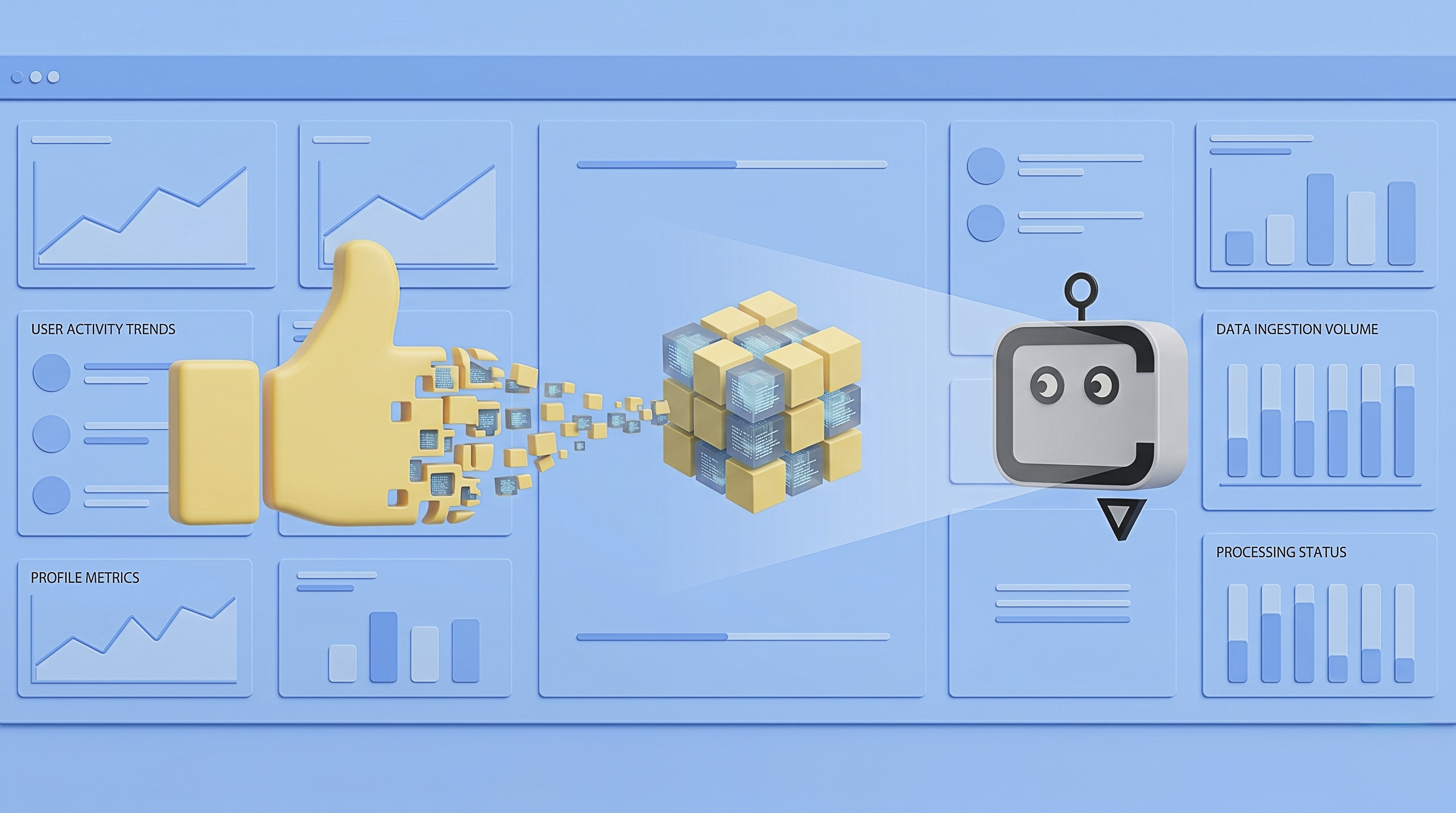
The governance layer also includes approval workflows. Not every team wants fully automated updates. The KC Bot supports configurable approval gates where changes get reviewed before going live. Your compliance team stays happy. Your legal team stays happy. Your AI keeps learning — just with adult supervision.
This combination of continuous learning and strong governance is rare. Most systems offer one or the other. Either you get a rigid, static model that’s safe but stale — or a flexible system that’s fast but risky. The KC Bot gives you both. Speed and safety. Agility and accountability.
Real Results: The Numbers Don’t Lie
Let’s talk outcomes. One early Chatlyst adopter — a mid-market company in the storage and logistics sector — deployed the KC Bot with continuous learning enabled. Within one month, they saw:
- 50% reduction in policy-related support tickets
- 20% improvement in AI-first resolution rate
- 10-point CSAT boost
That’s not incremental improvement. That’s a step change.
The 50% reduction in policy tickets tells a specific story. Before the KC Bot, the company’s static AI answered policy questions with outdated information. Customers got wrong answers, opened tickets, and waited for human agents to correct the record. After deployment, the AI gave accurate policy responses the first time — because it was learning from every correction and staying current with document updates.
The 20% improvement in AI-first resolution means more customers got their answers without ever needing a human. That translates directly to cost savings and faster resolution times. But it also means better customer experience — immediate answers, no waiting, no transfers.
The 10-point CSAT boost is the killer metric. Customer satisfaction doesn’t jump that much from cost-cutting. It jumps because customers are genuinely happier with the experience. They’re getting accurate answers. They’re not bouncing between channels. They’re not repeating themselves to multiple agents.
RedBox Storage, a Chatlyst customer, hit 92% AI-handled rate with continuous learning enabled. Nine out of ten customer interactions resolved entirely by AI — not because the AI was perfect on day one, but because it kept getting better. Every conversation taught it something. Every piece of feedback made it sharper.
These numbers matter because they represent a fundamental shift in how AI delivers value. Static models give you a fixed return — whatever accuracy you had at deployment is the best you’ll ever get, and it’ll only decline from there. Continuous learning models give you compounding returns — better every week, sharper every month, more valuable every quarter.
RAG Pipeline: Hallucination-Free at Scale
Hallucination is the boogeyman of enterprise AI. Ask an LLM something outside its training data and it’ll confidently make up an answer. This is unacceptable for customer-facing applications — but most AI systems don’t have a reliable solution.
Chatlyst’s RAG pipeline is designed specifically to eliminate hallucinations at scale. Here’s how it differs from standard implementations:
First, retrieval quality. Most RAG systems use semantic similarity — finding documents that “seem related” to the query. This works for simple questions and fails for nuanced ones. Chatlyst’s retrieval layer uses a multi-stage process: semantic matching, keyword verification, and context window scoring. A document only gets promoted to the generation stage if it passes all three filters.
Second, source anchoring. When the AI generates a response, every factual claim is tied to a specific document source. The system can explain where each piece of information came from. This isn’t just useful for debugging — it means the AI can’t invent facts because every claim must be grounded in a retrieved document.
Third, confidence gating. The system scores its own certainty for each response. High confidence? The answer goes straight to the customer. Medium confidence? The response includes a verification prompt or offers to connect with a human. Low confidence? Direct handoff, no guessing.
The proprietary enhancements in Chatlyst’s RAG pipeline add a fourth layer: cross-source validation. When multiple documents contain relevant information, the system checks for consistency. If sources conflict, it flags the conflict rather than picking a winner arbitrarily. This catches the edge cases where one document is outdated and another is current — exactly the scenario that trips up simpler systems.
At RedBox Storage’s 92% AI-handled rate, hallucination-free operation isn’t a nice-to-have — it’s mandatory. When nearly all customer interactions flow through AI, even a 2% hallucination rate creates a flood of bad experiences. The KC Bot’s RAG pipeline is designed for this reality: high volume, zero tolerance for made-up answers, continuous learning to stay accurate as knowledge evolves.

The Future: Self-Healing AI Agents
We’re heading toward a world where AI agents don’t just answer questions — they maintain themselves. Self-healing systems that detect knowledge gaps, propose corrections, and validate their own accuracy.
Chatlyst KC Bot is a step toward that future. The current feedback loop — flag, batch, review, update — is already far ahead of static models. But the trajectory is toward even more autonomous learning.
Imagine an AI that monitors its own confidence scores and proactively flags knowledge areas that need attention. An agent that compares its responses against ticket resolutions and auto-suggests document updates when patterns emerge. A system that spots contradictions across documents before they ever reach a customer.
This isn’t science fiction. The architecture exists. The data pipelines exist. What’s changing is the sophistication of the learning layer — moving from human-in-the-loop to human-on-the-loop, where AI handles routine updates autonomously and humans focus on exceptions and judgment calls.
The businesses that win in this transition won’t be the ones with the biggest training datasets. They’ll be the ones with the tightest feedback loops. The fastest cycle from error detection to correction. The most aggressive approach to treating every customer conversation as a learning signal.
Static AI is a dead end. It was a necessary stepping stone — a way to prove that language models could handle customer service at scale. But the next generation belongs to systems that learn. That adapt. That get better over time instead of worse.
The gap between static and continuous AI is already visible in the numbers. 50% fewer policy tickets. 20% better resolution rates. 10-point CSAT improvements. These aren’t marginal gains. They’re the difference between AI as a cost center and AI as a competitive weapon.
And this gap will widen. Static models degrade. Continuous models compound. The businesses running continuous learning systems today will be uncatchable in two years — not because they spent more on AI, but because their AI spent more time learning.
Getting Started with Continuous Learning
If you’re running a static AI system today, the transition to continuous learning isn’t a rip-and-replace. It’s an evolution.
Start by auditing your current setup. How often does your knowledge base get updated? How long does it take for those updates to reach your AI? How many support tickets are caused by outdated AI responses? If you don’t know these numbers, you’re flying blind.
Next, identify your sources of truth. Where do accurate answers live? Google Docs? Confluence? A Git repository? The KC Bot integrates with all of these, so you don’t need to migrate documentation. You need to connect what you have, so the system learns from your company data instead of static, disconnected files.
Then, turn on the feedback loop. Start collecting agent flags and corrections. Review them weekly. Get your team into the habit of treating every AI mistake as a signal for system improvement — not just a one-off fix.
Within the first month, you’ll see patterns. The same wrong answers appearing repeatedly. The same outdated policies causing confusion. These patterns are gold. They’re the roadmap for what your AI needs to learn first.
Chatlyst’s batch review system makes this practical. Fifty items per batch. Review, approve, update. Five minutes from flagging to live correction. Compare that to your current cycle — if it’s measured in weeks, you’re leaving value on the table every day.
The version control and governance features mean you can start conservative. Enable learning with approval gates. Watch how the system improves. Build confidence. Then open the throttle.
Continuous learning isn’t a feature you turn on. It’s a muscle you build. The companies that start exercising it now will be the ones with world-class AI experiences two years from now. The ones that don’t will still be scheduling quarterly knowledge base reviews.
Ready to Upgrade Your AI?
Static models had their moment. That moment is passing.
The businesses winning with AI today aren’t the ones that trained the biggest models. They’re the ones that built the fastest learning loops — turning every conversation, every correction, every document update into a system improvement.
Chatlyst KC Bot gives you that loop. Five minutes from flagging to live correction. Version control with rollback safeguards. RAG pipeline engineered for hallucination-free responses at scale. Integration with the tools your team already uses.
The early results speak for themselves: 50% fewer policy tickets, 20% better AI-first resolution, 10-point CSAT gains in a single month. This isn’t incremental. It’s a different category of AI performance.
If you’re tired of watching your AI get stale while your business moves forward, it’s time for a different approach. One where your AI learns every day instead of decaying. Where knowledge stays current without manual maintenance marathons. Where governance and speed aren’t trade-offs — they’re built in from day one.