Why AI-Native Beats AI Bolt-On: How Chatlyst Outperforms Zendesk at 60% Lower Cost
Jul 27, 2026
By Hunter Stone
Here’s a number most Zendesk customers don’t see coming: $246,900 per year. That’s the real annual cost of running a 50-agent support team with Zendesk’s “AI-powered” suite — and it’s not because the base subscription is expensive. It’s because Zendesk’s AI was never designed to be part of Zendesk in the first place.
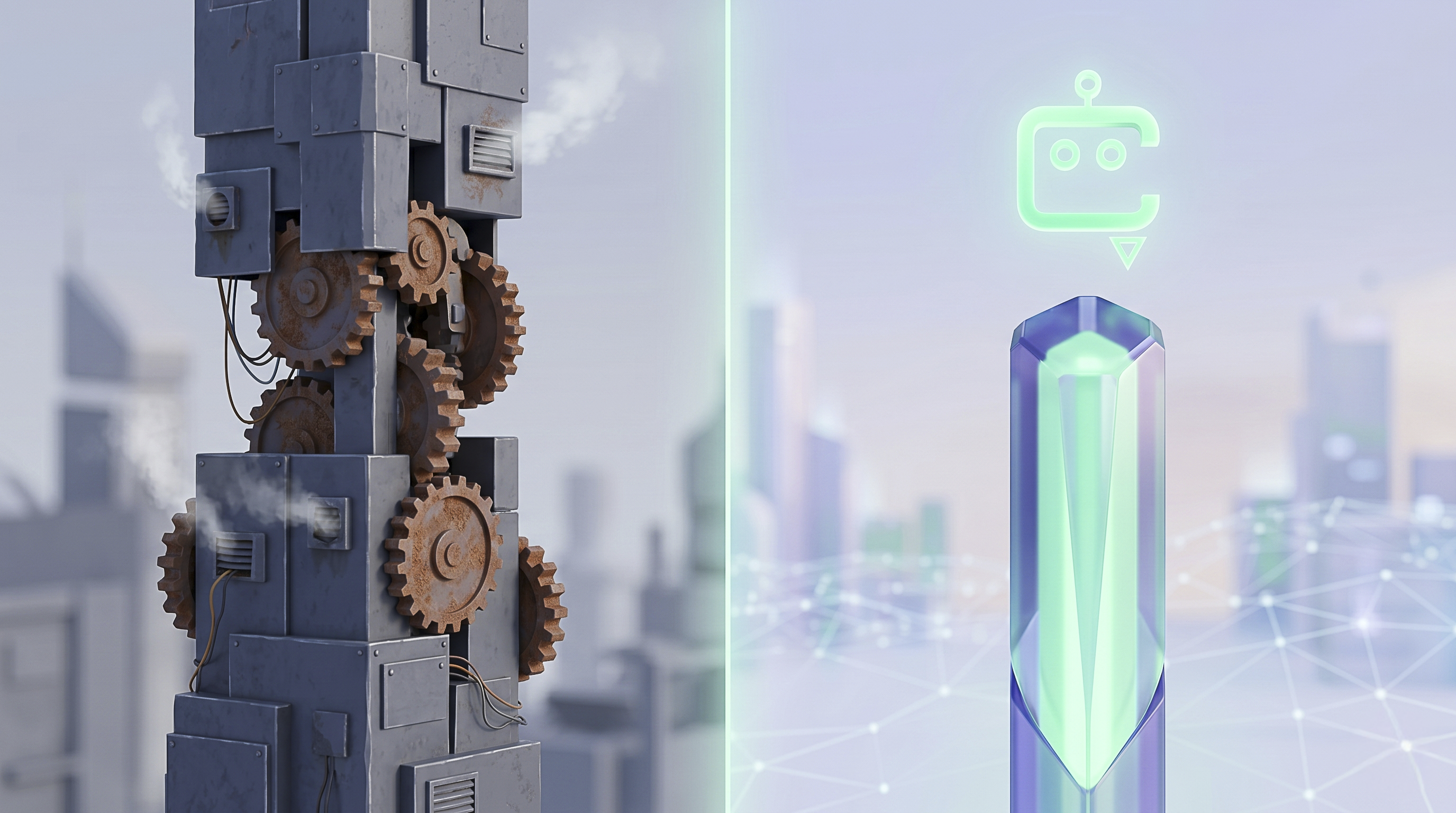
The industry has been sold a story: “Just add AI to your existing helpdesk.” But that story ignores what happens under the hood. When a platform wasn’t built for artificial intelligence from day one, every AI feature becomes a workaround. Every automated resolution carries a per-ticket surcharge. Every AI agent license sits on top of your existing seat fees. You’re not buying a smarter system — you’re stacking Frankenstein layers onto aging architecture.
Zendesk is the textbook case. Founded in 2007 as a traditional ticketing system, it spent fifteen years building a reliable but conventional helpdesk platform. Then the AI wave hit. Rather than rebuilding their core engine, Zendesk went shopping. They acquired Ultimate.ai in 2024. They folded in Cleverly’s technology. The result? AI features grafted onto a legacy codebase, charging customers premium prices for what amounts to an integration layer.
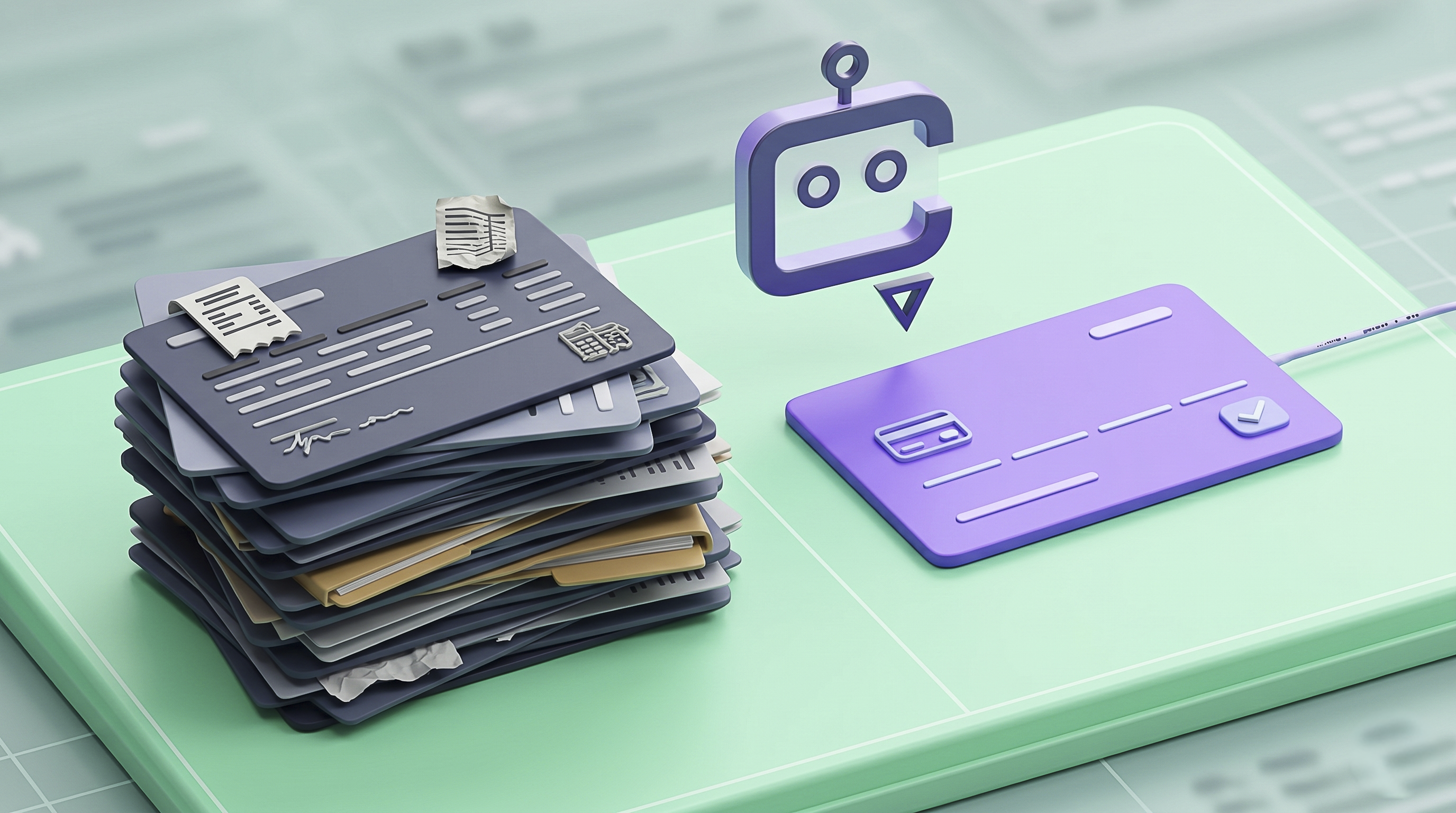
The consequences hit your budget in three places. First, the base seat fees: $55 to $169 per agent per month for Zendesk’s Suite plans. Second, the AI resolution fees: $1.50 to $2.00 for every automated ticket Zendesk handles. Third, the copilot add-on: $50 per agent per month for AI-assisted responses. Stack them together for a 50-agent team handling 10,000 tickets monthly with 60% AI resolution, and you hit that $246,900 annual figure. For a mid-sized support operation, that’s not a line item — that’s a second payroll.
Chatlyst took a different path. We built an AI-native platform from the ground up. No seat fees. No per-resolution surcharges. No bolt-on premium. You pay for AI responses at a flat rate, and that’s it. At HK$0.144 per AI response — roughly $0.018 USD — the math stops being a negotiation and starts being obvious. When you strip out the seat-fee architecture entirely, most teams see 60–80% lower total cost of ownership in their first year.
But this comparison isn’t just about price. It’s about what you get for what you pay. And that story starts with architecture.
The Architecture Problem: Acquired vs. Built-for-AI
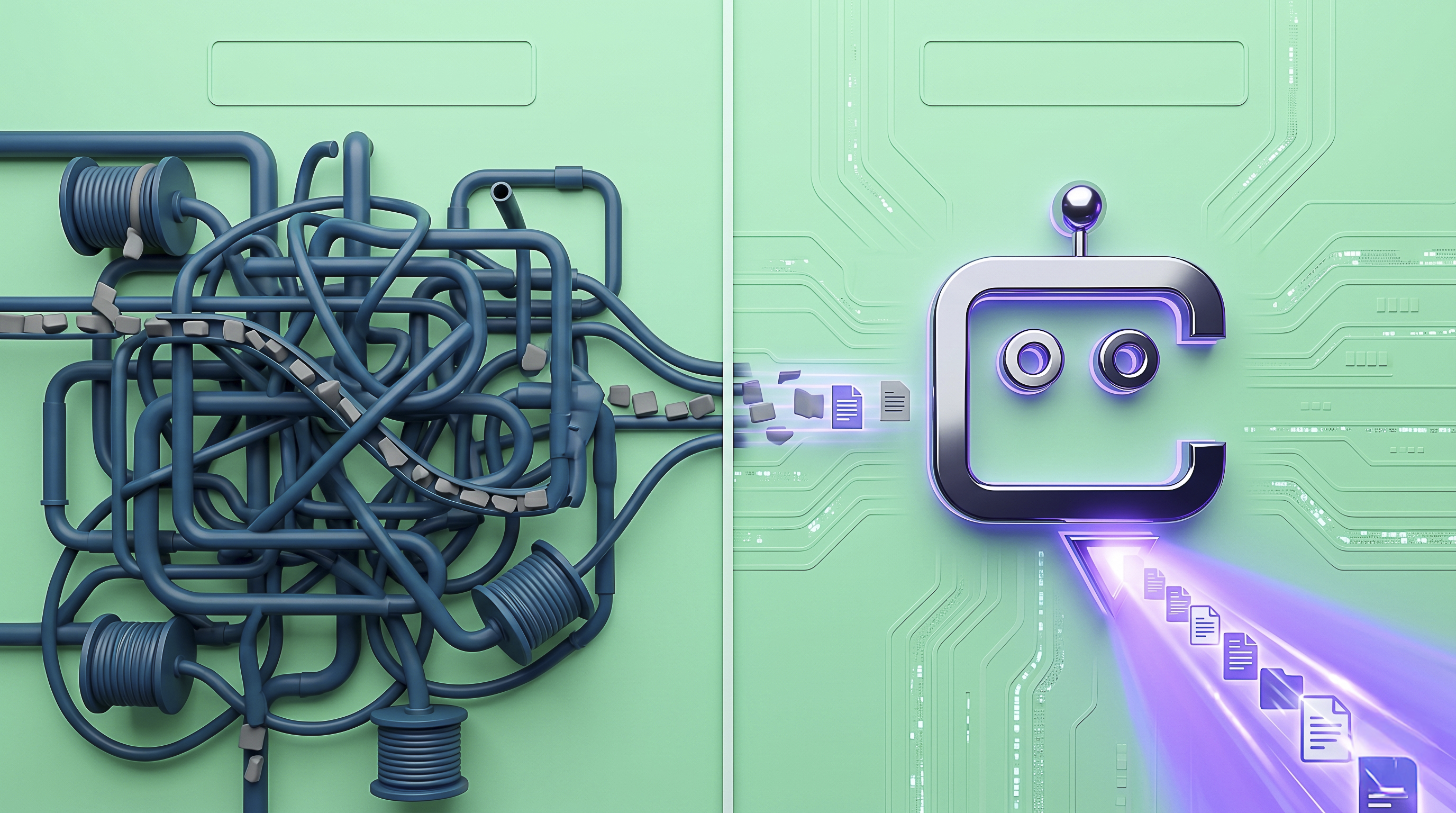
Zendesk’s AI strategy reads like a case study in defensive M&A. Ultimate.ai, acquired for an undisclosed sum in early 2024, brought natural language understanding capabilities. Cleverly added layer upon layer of AI-assisted triage and response drafting. On paper, Zendesk now offers “AI-powered” customer service. In practice, what they offer is a legacy ticketing database communicating with acquired AI modules through API calls and middleware.
This matters more than most buyers realize. When AI is bolted on rather than baked in, every interaction pays a latency tax. Data flows from the ticket system to the AI module, gets processed, then flows back. Context gets lost in translation. The AI doesn’t truly “know” your business — it’s a guest in a house built for someone else.
Chatlyst’s architecture inverts this model entirely. Our proprietary RAG pipeline — retrieval-augmented generation built specifically for customer service — doesn’t sit alongside our core engine. It is the core engine. Every query, every response, every escalation decision runs through a unified system designed from day one to handle AI-driven conversations. There is no middleware. There is no translation layer. The AI isn’t a plugin — it’s the platform.
The technical differences are stark. Zendesk’s basic RAG implementation retrieves documents and hands them to a language model with limited context awareness. The model generates a response based on what it found, but with no guarantees against hallucination. Support leaders we talk to report the same problem: Zendesk’s AI drafts sound confident but frequently invent policies, quote incorrect prices, or suggest resolutions that don’t exist. The cost of catching these errors? Human agent time — which defeats the purpose of automation.
Chatlyst’s RAG pipeline was engineered specifically to eliminate this failure mode. Our system doesn’t just retrieve information; it validates, cross-references, and locks responses to verified knowledge base content. The result is zero-hallucination output. When Chatlyst gives a customer an answer, that answer came from your documentation — not from the model’s training data imagination.
This architectural gap isn’t a minor technical detail. It’s the difference between automation you trust and automation you babysit. And that trust gap shows up directly in resolution rates.
Pricing: When the Bill Arrives, the Math Gets Real
Let’s stop talking in abstract tiers and look at what a real company actually pays.
A 50-agent support team using Zendesk Suite Professional — the plan most teams need for meaningful AI features — pays $115 per agent per month. That’s $69,000 a year just for seats. Add Zendesk’s Advanced AI copilot at $50 per agent per month, and you’re up to $99,000 annually. Then come the automated resolutions. At 10,000 tickets per month with a 60% AI resolution rate, you’re automating 6,000 tickets. Zendesk charges $1.50 to $2.00 per automated resolution. At the conservative end, that’s $108,000 more per year.
Total Zendesk annual cost: $207,000 to $246,900. And that’s before implementation fees, training costs, and the engineering time required to keep the integrations running.
Chatlyst’s pricing model demolishes this structure entirely. There are no seat fees. It doesn’t matter if you have 10 agents or 500 — you pay nothing for human seats. The pricing is consumption-based: HK$0.144 per AI response, which converts to approximately $0.018 USD. For that same 10,000-ticket workload, your AI response costs become trivial compared to Zendesk’s per-resolution fees.
Let’s run the numbers. If Chatlyst handles those 10,000 monthly tickets at a 95% auto-resolution rate — which our customers regularly achieve — you’re looking at roughly 9,500 automated resolutions. At $0.018 per response, that’s about $171 per month, or $2,052 per year. Even accounting for escalations and human-handled tickets, the total cost typically lands between 20–40% of Zendesk’s pricing for comparable or better performance.
The 60–80% cost savings — see the pricing for a full breakdown —aren’t a marketing claim. They’re the natural result of eliminating seat-based pricing in a world where AI does the work. Zendesk charges you for seats because that’s how legacy helpdesk software was sold. Chatlyst doesn’t charge for seats because AI-native software doesn’t need them.
Resolution Rate: 95% Auto-Resolution vs. 50–70% Claims
Zendesk advertises AI resolution rates of 50–70% on its marketing materials. The key word there is “advertises.” Talk to teams actually running Zendesk AI in production and you hear a different story. Consistent 70% resolution requires extensive setup, continuous manual tuning, and favorable ticket types — mostly simple, repetitive queries. The moment a conversation veers off-script, Zendesk’s bolt-on AI escalates to a human agent.
The reason is architectural. Zendesk’s acquired AI modules weren’t trained on your specific business context out of the box. They require massive knowledge base preparation, intent mapping, and ongoing manual adjustments to approach their advertised performance. Most teams we speak with report real-world automated resolution rates between 40–55%, especially in the first six months. Getting to 70% is possible — it’s just expensive, time-consuming, and fragile.
Chatlyst operates in a different reality. Our customers consistently achieve 95% auto-resolution rates. This isn’t a marginal improvement — it’s a category difference. At 95%, your human agents handle only the genuinely complex exceptions: angry customers demanding supervisors, multi-layered technical failures, edge cases that truly require human judgment. Everything else — product questions, policy inquiries, troubleshooting steps, refund status checks — gets handled automatically, accurately, and instantly.
How? It comes back to the AI-native architecture. Because Chatlyst’s RAG pipeline was purpose-built for customer service resolution, it doesn’t just match customer queries to FAQ entries. It understands context, follows conversation threads, asks clarifying questions when needed, and grounds every response in your verified documentation. The system learns your business, not the other way around.
The business impact of this gap is enormous. At 50% resolution, you’re still paying for 5,000 human-handled tickets monthly. At 95%, that drops to 500. The labor cost difference alone justifies the switch — never mind the speed, consistency, and 24/7 availability that AI agents provide.
Deployment Speed: Minutes vs. Weeks
Here’s a question that separates real AI platforms from AI bolt-ons: How long until your first automated resolution?
With Zendesk, the timeline is measured in weeks. First, your team needs to audit and restructure your knowledge base for compatibility with Zendesk’s AI modules. Then comes the integration configuration — connecting Ultimate.ai and Cleverly components, setting up API credentials, mapping data fields. Then intent training, where your team manually categorizes hundreds or thousands of historical tickets to teach the AI what customers ask. Then testing, refinement, and a cautious phased rollout.
The industry average for Zendesk AI deployment? Four to eight weeks for basic functionality. Three to six months for mature, high-performing automation. And throughout that period, you’re paying full price for seats, copilot licenses, and implementation resources.
Chatlyst deploys in minutes. Not days. Minutes.
Connect your knowledge base — whether it’s a help center, Notion wiki, Google Docs, or a collection of Word files — and Chatlyst’s KC Bot automatically ingests, structures, and indexes your content. No coding. No IT ticket. No consultant billing hours. The system builds its understanding of your business from your existing documentation, and it’s ready to handle conversations immediately.
The speed difference isn’t about having a better onboarding checklist. It’s about architecture, again. Because Chatlyst was built as an AI-native platform, there’s no integration work to reconcile a ticketing system with an AI module. The entire system speaks one language from the start. Your knowledge base becomes the training data, and the training happens automatically.
For businesses launching new products, entering new markets, or simply tired of waiting for ROI, this speed gap changes the entire equation. A support channel that deploys in an afternoon and handles 95% of queries automatically isn’t an incremental improvement — it’s a strategic weapon.
The RAG Pipeline: Why Basic Retrieval Loses to Purpose-Built Validation
Retrieval-augmented generation is the technology behind modern AI support systems. The concept is straightforward: when a customer asks a question, the system retrieves relevant information from a knowledge base and uses it to generate a response. But the implementation details determine whether your AI helps customers or frustrates them.
Zendesk uses a basic RAG approach. The system receives a query, searches the knowledge base for keyword matches, retrieves the top few results, and hands them to a language model for response generation. It works — for simple queries with obvious answers. But it breaks down quickly under real-world conditions.
The problems are well-documented. Basic RAG retrieves documents but doesn’t deeply understand their content. It can’t resolve contradictions between different knowledge base articles. It has no mechanism to verify that a retrieved policy is still current. Most critically, it offers no protection against hallucination — the AI can and does generate confident-sounding answers that have no basis in your actual documentation.
For a support leader, hallucination is the nightmare scenario. An AI that tells a customer they qualify for a refund they don’t actually qualify for, or quotes a price that doesn’t exist, or suggests a troubleshooting step that voids their warranty — this isn’t automation. It’s liability generation.
Chatlyst’s proprietary RAG pipeline was engineered to solve exactly these failure modes. Our system doesn’t just retrieve — it validates. Cross-references. Locks response generation to verified, current documentation. If information is ambiguous, the system asks clarifying questions rather than guessing. If two knowledge base articles conflict, the system flags the discrepancy rather than picking one arbitrarily.
The result is zero-hallucination output. Every response Chatlyst generates traces back to a specific piece of your documentation. You can audit it. You can trust it. And your customers get accurate information every single time.
This isn’t an incremental technical improvement. It’s the difference between automation you can deploy confidently and automation that requires human oversight on every interaction. When your AI never hallucinates, you can let it handle 95% of your volume unsupervised. When it might hallucinate, you can’t.
Continuous Learning: KC Bot vs. Manual Tuning Treadmill
AI systems don’t stay current by themselves. Customer policies change. Products get updated. New issues emerge. The question is: how much work does it take to keep your AI accurate?
Zendesk’s answer: a lot. Keeping the AI current requires manual tuning. Your team needs to review conversation logs, identify misclassified intents, add new training examples, update entity mappings, and periodically retrain the models. For a busy support operation, this becomes a part-time job for at least one team member — often more. And if you neglect it, performance degrades. The 50–70% resolution you worked hard to achieve starts slipping backward.
Chatlyst replaces this manual treadmill with autonomous learning through KC Bot, our knowledge companion bot. Here’s how it works: KC Bot monitors customer conversations in real-time, identifies gaps between what customers ask and what the knowledge base covers, and learns from feedback in batches of 50 items. When a conversation reveals missing information, KC Bot flags it. When customer feedback indicates a response could be clearer, KC Bot incorporates the improvement.
The learning happens continuously, automatically, and at scale. Your team doesn’t need a dedicated AI trainer. You don’t need to schedule weekly tuning sessions. The system gets smarter on its own — not by guessing, but by learning from real customer interactions with human-validated feedback.
This matters because knowledge drift is one of the biggest hidden costs in AI support. A system that was accurate six months ago might be dangerously out of date today — unless someone is actively maintaining it. KC Bot handles that maintenance autonomously, which means your AI’s performance curve trends upward over time instead of decaying.
For support leaders evaluating total cost of ownership, this is a critical factor. Zendesk’s visible subscription fees are only part of the picture. The hidden cost of manual AI maintenance — staff hours, delayed updates, gradual performance degradation — adds thousands of dollars annually. Chatlyst’s autonomous learning eliminates that overhead entirely.
The Verdict: Why AI-Native Wins
After examining architecture, pricing, resolution rates, deployment speed, RAG pipeline quality, and continuous learning capabilities, the conclusion is unambiguous: AI-native platforms outperform bolt-on AI across every dimension that matters.
Zendesk isn’t a bad product. It’s a solid, mature helpdesk platform that added AI through acquisition because it had to. But that addition comes with structural costs — financial, technical, and operational — that no amount of marketing can erase. The seat-fee model, the per-resolution surcharges, the middleware architecture, the manual tuning requirements, and the hallucination risks are all consequences of the same fundamental choice: building a ticketing system first, then bolting AI on top.
Chatlyst made the opposite choice. We built an AI-native customer service platform from the ground up, with proprietary RAG technology, zero seat fees, autonomous learning, and a deployment model measured in minutes rather than months. The result is 95% auto-resolution at 60–80% lower total cost, with zero hallucination output and continuous improvement that doesn’t require your team’s attention.
For support leaders making platform decisions in 2025, the question isn’t whether AI can handle customer service. The question is whether you’re paying legacy prices for a workaround, or modern prices for a platform built for the job.
Make the Switch to AI-Native Support
If you’re running Zendesk today, you don’t need to rip and replace overnight. But you do need to see the real numbers. Run your actual ticket volume, seat count, and resolution goals through Chatlyst’s pricing model. Compare your current spend — seats, copilot licenses, per-resolution fees, implementation costs, and maintenance overhead — against a flat per-response rate with no seat fees.
Most teams find the math impossible to ignore. A 50-agent operation spending $246,900 per year with Zendesk can often achieve better results for under $80,000 with Chatlyst. That’s not a minor optimization — it’s a fundamental restructuring of your support economics.
[Start your free Chatlyst trial today ]
No seat fees. No implementation timeline. No hallucination risk. Just AI that works — from day one, at a fraction of the cost.