

Chatlyst vs Wati: A Head-to-Head Comparison for WhatsApp Customer Service
Aug 10, 2026
By Hunter Stone
Wati built a name as an early WhatsApp Business API provider. Their landing page promises “simple WhatsApp commerce” starting at $49 per month. It sounds reasonable — until you dig into what that $49 actually buys you.
Spoiler: it doesn’t buy much. Workflows cap out. AI responses run dry mid-month. Every extra agent costs another $24 to $69. And if you want actual AI that understands your business, you need to bolt on a separate product with a separate knowledge base.
Chatlyst takes a different approach. One platform. One inbox. No per-seat fees. AI that actually resolves conversations — not just replies to them.
We compared both platforms across ten dimensions that matter for customer service teams.Check out the full feature list below to see what we found.
Wati vs Chatlyst: At a Glance
Wati is a WhatsApp-first messaging tool. It lets you send broadcasts, set up basic chatbot flows, and connect a Shopify store. It works fine if your entire business lives inside WhatsApp and your support volume stays low.
Chatlyst is a true omnichannel AI customer service platform. WhatsApp, Facebook Messenger, Instagram, web chat, email — all feeding into one unified inbox. AI handles up to 95% of conversations without human intervention. No session caps. No per-agent fees. Built-in knowledge management that scales with your business.
The core difference: Wati is a WhatsApp add-on. Chatlyst is a complete customer service replacement.
What Wati Gets Right
Wati has been around since 2020. They have brand recognition. Their Shopify integration is functional. For a single-founder dropshipping store doing a few hundred orders a month, Wati covers the basics.
Where Wati Falls Apart
The problems start when you scale. Wati’s Growth plan limits you to 1,000 chatbot sessions per month. Hit that cap and your automated workflows simply stop. Customers message you. Your bot goes silent. Your team manually picks up the pieces.
Their AI — branded as “Astra” — is a separate product with its own billing and its own knowledge base. You can’t test it in a sandbox. You get 250 to 1,000 AI responses per month depending on your plan. For a team handling even modest volume, that runs out fast.
The 100MB knowledge base limit means you can upload a handful of PDFs. That’s it. No web crawling. No dynamic updates. No proprietary RAG architecture optimizing retrieval quality.
Pricing Comparison: Advertised vs. Real
Wati advertises three tiers: Growth at $49, Pro at $99, and Business at $299 per month. On paper, Pro looks like the sweet spot. In reality, it’s where the bill starts ballooning.
The Hidden Cost Math
Let’s break down what a real team actually pays on Wati Pro.
Start with the base price: $99. That includes two users. Need a third and fourth agent? That’s $24 to $69 per extra user per month. For a four-person team, add roughly $50 to $140.
Now your chatbot sessions. Pro gives you 2,000. A mid-sized ecommerce store doing 15,000 conversations monthly blows past that in a week. Extra sessions run approximately $40 per 1,000. For 13,000 overage sessions, add $520.
Want AI that actually works? Astra bills separately. KnowBot — Wati’s other AI assistant — also bills separately. Neither shares a knowledge base with the other.
Running Shopify? The “advanced” integration costs $4.99 extra. Small line item, but it adds to the pattern: everything is an upsell.
Real monthly cost for a 4-agent team with 15K conversations: $350 to $450. That is 3.5x the advertised $99.
Chatlyst: What You See Is What You Pay
Chatlyst does not charge per seat. Add ten agents. Add fifty. The price stays the same. Unlimited AI responses. Unlimited sessions. No mid-month shutdowns because you hit an arbitrary cap. One knowledge base. One bill. No Meta markup surprises.
AI Capabilities: 95% Resolution vs. Capped Responses
This is where the gap becomes a canyon.
Wati’s AI: Three Products, Three Limitations
Wati offers three AI-adjacent features: a basic rules-based chatbot builder, “Astra” for conversations, and “KnowBot” for knowledge retrieval. Here is the problem — they are separate products with separate configurations and separate knowledge bases. You maintain three systems to do one job.
Astra caps AI responses at 250 on the Growth plan and 1,000 on Business. When you hit the limit, the AI stops responding. There is no sandbox for testing prompts or flows before going live. The knowledge base maxes out at 100MB — roughly 20 to 30 PDFs for most businesses.
The chatbot builder uses decision trees. “If user says X, reply Y.” It works for password resets and business hours. It breaks when a customer asks something unscripted. No natural language understanding. No context memory across sessions.
Chatlyst’s AI: Built to Resolve, Not Just Reply
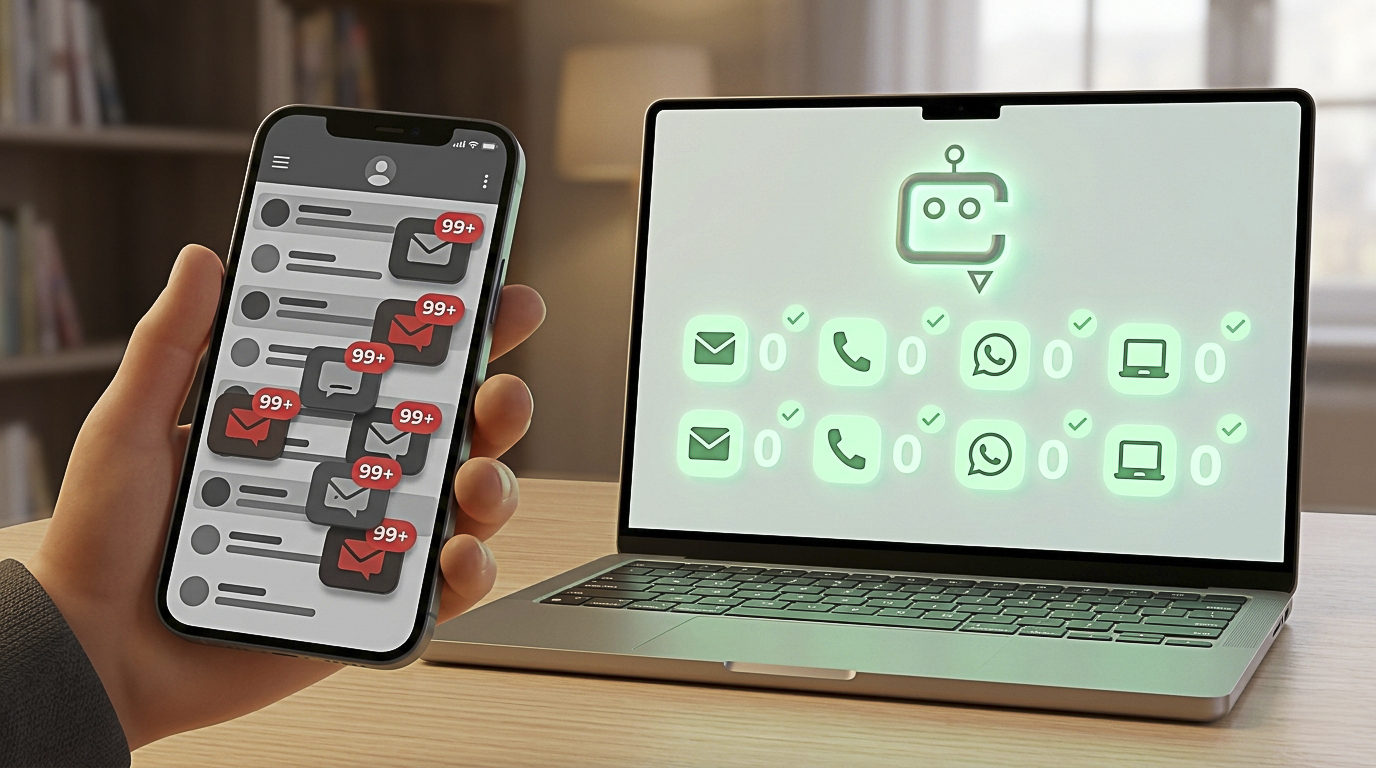
Chatlyst’s AI resolves up to 95% of conversations without human handoff. It uses proprietary RAG (Retrieval-Augmented Generation) architecture — the same technology powering the most advanced enterprise AI systems, tuned specifically for customer service.
Here’s what that means in practice:
- Contextual understanding. The AI reads your entire knowledge base, conversation history, and customer data to give accurate, specific answers. Not generic templates — real solutions.
- KC Bot. Knowledge Center Bot dynamically retrieves and synthesizes information across your documentation, past tickets, product catalogs, and FAQs. One unified knowledge base. No silos.
- 70+ languages. Auto-detect and respond in the customer’s language without switching models or paying translation add-ons.
- No response caps. The AI doesn’t shut off on the 15th of the month because you had a busy week.
- Sandbox testing. Build, test, and refine AI responses before they ever touch a live customer.
The difference is fundamental. Wati’s AI deflects. Chatlyst’s AI resolves.
Omnichannel: True Unified Inbox vs. WhatsApp-Only
Wati calls itself a “WhatsApp API platform.” That is honest branding — because WhatsApp is all they do. If your customers message you on Instagram, Facebook Messenger, or your website chat widget, those conversations live in separate tools with separate teams.
This matters more than most teams realize. Modern customers use 3 to 4 different channels to contact a business before making a purchase. Forcing them to switch to WhatsApp creates friction. Your team loses context every time a conversation jumps channels.
Chatlyst brings every channel into one inbox. WhatsApp, Messenger, Instagram DMs, web chat, email — all visible to every agent. Full conversation history follows the customer across channels. An issue that starts on Instagram can be resolved on WhatsApp without anyone losing context.
This is not a nice-to-have. It is the difference between a support team that operates like a unit and one that operates in silos.
Knowledge Management: Unlimited vs. 100MB Cap
Your knowledge base is the brain of your AI. When it is limited, your AI is effectively operating with amnesia.
Wati’s knowledge base tops out at 100MB. That is enough for a basic FAQ and a few product manuals. It is not enough for a growing business with multiple product lines, return policies, shipping tables, troubleshooting guides, and regional variations.
Chatlyst’s knowledge management has no arbitrary size limit. Upload documentation, connect web sources, sync with your help center, feed in past support tickets. The proprietary RAG system indexes everything and retrieves the right information at the right time — not just keyword matching, but semantic understanding of what the customer actually needs.
The KC Bot feature goes further. It learns from every conversation. When a customer asks something not covered in your docs, the system flags the gap. Your team fills it once. The AI handles it correctly forever after.
Scalability: Unlimited vs. Hard Session Caps
This is the issue that breaks Wati for growing teams. Every plan has a chatbot session cap:
- Growth: 1,000 sessions
- Pro: 2,000 sessions
- Business: 5,000 sessions
When you hit the cap, your chatbot workflows stop executing. Broadcasts may still send, but automated responses die. Customers message you. Nothing happens. Your agents manually handle the overflow — precisely the problem you bought automation to solve.
Imagine your ecommerce store runs a flash sale. Traffic spikes. Conversations triple. On Wati, this is when your automation abandons you. On Chatlyst, the AI scales with demand. No caps. No overage fees. No workflows grinding to a halt during your busiest moments.
Support Quality: Human Experts vs. Bot-Led Triage
We tested both platforms’ support experiences. The difference was stark.
Wati’s support routes through a chatbot first. Simple questions get automated responses. Complex issues submit a ticket with a 24 to 48 hour response time. Their knowledge base and documentation is functional but shallow. For a platform selling customer service tools, the irony is hard to miss.
Chatlyst provides direct access to customer success engineers who understand AI, integrations, and workflow design. Implementation support is included — not a $2,000 upsell. The team helps you configure your knowledge base, optimize AI responses, and connect your channels. You talk to humans who use the product themselves.
Deployment: Instant Free Trial vs. Demo-Required
Wati requires you to book a demo before accessing the platform. No trial. No sandbox. You sit through a sales call, get pitched the $99 plan, and only then see what you are buying.
Chatlyst offers an instant free trial. No credit card. No sales call. Set up your account, connect a WhatsApp number, and test the AI against real conversations in minutes. Your team evaluates the platform on its merits — not on a sales presentation.
Security and Compliance: Enterprise-Grade vs. Basic
Wati provides standard encryption and basic access controls. Fine for small merchants.
Chatlyst builds for enterprise from day one. SOC 2 compliance. End-to-end encryption. Role-based access controls with granular permissions. Audit logs for every action. Data residency options. For businesses handling financial, healthcare, or regulated industries, this is not optional — it is a requirement.
The Verdict: 7 Reasons Chatlyst Wins
After comparing both platforms across pricing, AI quality, channel coverage, knowledge management, scalability, support, deployment, and security, the winner is clear.
1. Transparent pricing. Chatlyst shows you the real cost upfront. Wati’s $99 plan becomes $350+ in practice.
2. AI that resolves. 95% resolution rate with proprietary RAG vs. 250-1,000 capped responses on a basic model.
3. True omnichannel. One inbox for every channel vs. WhatsApp-only with fragmented tools.
4. Unlimited scale. No session caps, no overage fees, no workflows stopping mid-month.
5. Unified knowledge. One knowledge base with no size limit vs. three separate products with a 100MB cap.
6. Human support. Direct access to engineers vs. chatbot triage and 48-hour ticket queues.
7. Try before you buy. Instant free trial vs. demo-required sales process.
Ready to Switch?
If you are on Wati and hitting limits — session caps, AI response quotas, per-agent fees — you are not alone. Hundreds of teams have made the move to Chatlyst.
Start your free trial today. Connect your WhatsApp number in under five minutes. Test the AI against your real customer conversations. See what 95% resolution actually looks like.
No hidden fees. No session caps. No surprises.