
What Happened to Ultimate.ai? Why Its Acquisition Left a Gap That Chatlyst Fills
Aug 17, 2026
By Hunter Stone
Ultimate.ai was one of the most promising names in AI-powered customer support. Founded in 2017, the Helsinki-based startup built a reputation for intelligent automation that actually understood customer intent — not just keyword matching dressed up as AI. Zendesk invested in it. Major brands adopted it. It felt like the future.
Then, in 2024, Dixa acquired it.
Today, if you go looking for Ultimate.ai, you won’t find it. The brand is gone. The standalone product is gone. What exists now is “Dixa AI” — a set of features bolted onto Dixa’s broader customer service platform. And for many teams that trusted Ultimate.ai’s original vision, that transition has been rough.
This post isn’t a hit piece. It’s a clear-eyed look at what changed, what it costs, and why a growing number of support teams are treating the acquisition as a signal to move on — specifically to Chatlyst, the AI-native platform built on the principles Ultimate.ai once championed.
The Disappearance of a Promising Product
If you were evaluating AI support tools in 2022 or 2023, Ultimate.ai almost certainly came up. It positioned itself as a virtual agent platform that could handle real conversations — resolving tickets, not just deflecting them. The technology was solid. The positioning was sharp. The team knew what they were building.
Fast forward to today. Visit ultimate.ai and you get redirected to Dixa. Search for “Ultimate.ai pricing” and you hit a wall — because there is no Ultimate.ai pricing anymore. There’s only Dixa pricing. And Dixa pricing is a different animal entirely.
This matters because acquisition-driven product death is a real pattern in SaaS. A company with a focused, well-built tool gets bought by a platform vendor looking to fill a feature gap. The acquired product gets absorbed, rebranded, and diluted. The original users — the ones who chose the tool for its specific strengths — are left holding a migration plan they never asked for.
That’s exactly what happened here.
What the Dixa Acquisition Actually Changed
Dixa is a traditional omnichannel customer service platform. It offers ticketing, phone, email, chat, and social media management in one interface. It’s a legitimate product for certain use cases, but its core DNA is rooted in conventional support workflows — queues, tags, manual routing.
Ultimate.ai’s DNA was different. It was AI-first from day one. Intent recognition, automated resolution, conversational intelligence — that was the whole point. The acquisition forced these two fundamentally different architectures into the same container.
The result? Dixa AI exists as a set of add-ons inside a platform that wasn’t designed for it. Co-Pilot ($39 per agent per month) gives agents AI-powered response suggestions. QA ($29 per agent per month) adds automated quality assurance scoring. The Chatbot module charges $0.40 per conversation. Each of these was essentially an Ultimate.ai feature, now unbundled and sold separately on top of a platform subscription.
This is the first real shock for former Ultimate.ai customers: what used to be a focused product is now a menu of optional extras inside a much larger — and more expensive — system.
The Pricing Shock: From Focused Tool to Enterprise Burden
Let’s talk numbers, because this is where the acquisition’s impact becomes impossible to ignore.
Dixa’s base platform starts at $89 per agent per month for the “Professional” tier and climbs to $179 per agent per month for “Ultimate.” There’s a seven-seat minimum on every plan. So before you’ve touched a single AI feature, you’re spending at least $7,476 per year — and that’s at the lowest tier.
Now add the AI components that used to be Ultimate.ai’s core offering:
- Co-Pilot: $39 per agent per month
- QA: $29 per agent per month
- Chatbot: $0.40 per conversation
For a ten-agent team on Dixa Ultimate with full AI features, the annual cost lands around $24,840. And that’s assuming moderate chatbot usage. Heavy automation volume pushes that number higher.
Compare this to what Ultimate.ai offered as a standalone product. Its pricing was competitive and transparent. You knew what you were paying for, and you weren’t subsidizing a suite of channels and features your team didn’t use. That clarity is gone.
The seven-seat minimum is especially brutal for smaller teams. A five-person support operation can’t even buy Dixa at the listed rates. They’re forced to pay for seats they don’t have. This pricing architecture screams “enterprise sales process” — which, of course, it is.
AI Capability Dilution: The 3.0 Rating Tells a Story
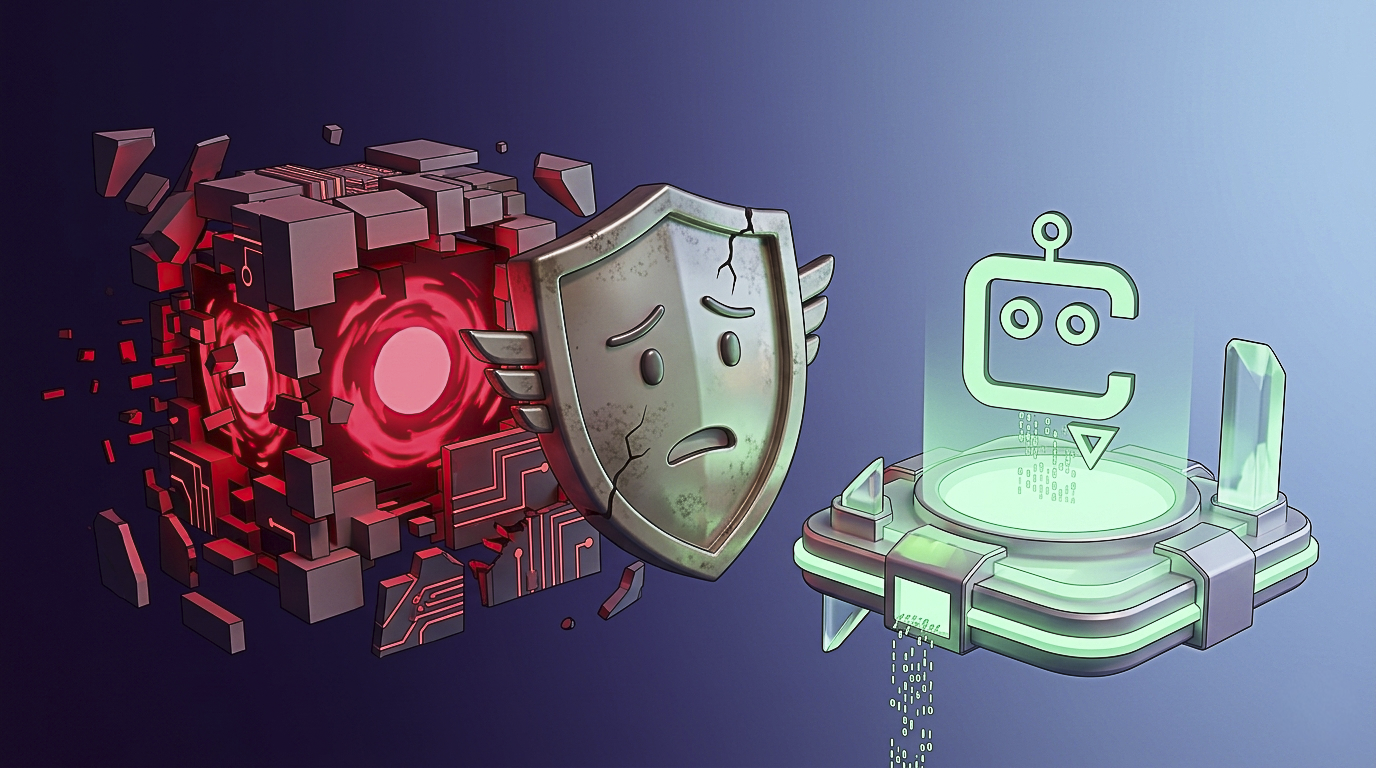
Dixa AI currently holds a 3.0 out of 5 rating on G2. That’s not catastrophic, but it’s not good either — especially for a product built on technology that was once considered cutting-edge.
Reviewers are specific about the problems. Common complaints include slow response generation, limited context understanding across conversations, and a configuration process that requires significant technical effort. One G2 reviewer put it bluntly: Dixa AI “trails Intercom” in both ease of use and output quality.
This is the dilution problem in action. Ultimate.ai’s technology was built as a focused system — every engineering decision optimized for conversational AI performance. When that technology got pulled into Dixa’s broader platform, priorities shifted. Integration with legacy ticketing workflows took precedence over raw AI capability. The result is a system that checks the “AI features” box on a sales deck without delivering the performance that made Ultimate.ai notable.
There’s a deeper issue here too. AI models need constant refinement, retraining, and tuning. When the team responsible for that work gets absorbed into a larger organization with different roadmaps and competing priorities, the product suffers. The engineers who built Ultimate.ai’s intent models are presumably still at Dixa, but their work is now one input among many in a platform with a much broader scope.
Platform Lock-In vs. Independence: The Architecture Problem
Here’s a decision that every support team faces post-acquisition: do you stay with the merged platform and accept the trade-offs, or do you look for an alternative?
The case against staying is strong. Dixa represents classic platform lock-in. Your AI capabilities, your ticketing, your customer data, your conversation history — everything lives inside one vendor’s ecosystem. If Dixa’s roadmap doesn’t match your needs, or if their pricing continues to climb, your exit options are painful and expensive.
This wasn’t the deal with Ultimate.ai. It was a best-of-breed tool. You could plug it into your existing stack — Zendesk, Salesforce, whatever you were running — and get AI automation without surrendering your infrastructure decisions. That flexibility was a core part of its value proposition.
Chatlyst operates on the same principle. It’s purpose-built as an AI-first support platform, independent of any legacy ticketing vendor. You get advanced automation, real-time resolution, and conversational intelligence without marrying a monolithic platform. If your needs change, you’re not trapped. If you want to integrate with other tools, you can. Independence isn’t a marketing slogan — it’s an architectural choice that affects your operational freedom every single day.
Deployment Reality: Demo-Led Sales vs. Instant Setup
Want to try Dixa AI? Schedule a demo. That’s the only on-ramp.
Dixa doesn’t offer self-service signup for its AI features. Every evaluation goes through a sales team, a discovery call, a custom quote process, and an implementation timeline measured in weeks or months. For some enterprise buyers, this white-glove approach feels appropriate. For teams that need to move fast — and in 2025, that’s most teams — it’s a friction point that kills momentum.
Chatlyst takes the opposite approach. Sign up, connect your channels, and start automating within hours. There’s a free trial. No credit card required to evaluate. No sales calls before you can see the product work with your actual conversation data.
This difference reflects a philosophical divide. Dixa treats AI as an enterprise add-on to be sold through consultative sales processes. Chatlyst treats AI as a product that should prove its value immediately, in the user’s real environment, with minimal friction. One approach optimizes for contract size. The other optimizes for user success.
The speed gap matters in practice. A support manager who identifies an automation opportunity on Monday can have Chatlyst resolving real tickets by Wednesday. With Dixa, that same manager is still scheduling intro calls by Wednesday, with a go-live date somewhere in the next quarter.
Enterprise Readiness: Scores Tell the Truth
Dixa’s enterprise feature rating sits at 2.5 out of 5. That’s a problem for a platform positioned at the $89-$179 per agent price point with a seven-seat minimum.
Enterprise features in this context mean things like: granular role-based permissions, robust API access, advanced analytics and reporting, SLA management, custom integration capabilities, and audit logging. These aren’t nice-to-haves for larger teams — they’re requirements. A 2.5 rating suggests that Dixa struggles to meet these needs at a level that justifies its positioning as a premium platform.
This creates a strange market position. Dixa is priced like an enterprise solution and sold through enterprise sales motions, but its enterprise capabilities get mediocre reviews from the users actually operating at scale. The AI features — which are supposed to justify the premium — compound the problem by adding cost without delivering standout performance.
Chatlyst doesn’t carry this baggage. Built from the ground up as an AI-native platform, its architecture handles scale without the weight of legacy system compromises. Teams can start small and grow without hitting the kind of enterprise capability walls that Dixa reviewers describe.
The Total Cost Comparison: What You’re Really Paying
Let’s run the numbers for a clear comparison. Assume a ten-agent support team looking for AI-powered automation.
With Dixa, your minimum viable setup looks like this:
- Dixa Ultimate platform (10 agents at $179 each): $1,790 per month
- Co-Pilot add-on (10 agents at $39 each): $390 per month
- QA add-on (10 agents at $29 each): $290 per month
- Chatbot usage (estimate 2,000 conversations at $0.40): $800 per month
- Annual total: approximately $38,160
Even if you downgrade to Dixa Professional ($89 per agent) and accept fewer features, you’re still looking at over $24,840 per year with AI add-ons included — and that’s before chatbot volume charges stack up.
With Chatlyst, pricing is transparent and built around actual usage. There are no seven-seat minimums forcing you to buy phantom licenses. There are no required platform subscriptions funding features you’ll never touch. You pay for the AI capabilities you use, period.
The difference isn’t incremental. It’s the gap between a platform tax and a product price. Over a three-year contract — which Dixa’s sales team will absolutely push for — the total cost divergence becomes a significant line item in any support operations budget.
Why Chatlyst Is the True AI-First Alternative
The acquisition of Ultimate.ai created a vacuum. It removed a well-regarded, focused AI support tool from the market and replaced it with something more expensive, less focused, and demonstrably weaker at the core task of AI-powered customer service.
Chatlyst exists to fill that vacuum — not as a clone, but as an evolution.
Built from scratch as an AI-native platform, Chatlyst avoids every compromise that Dixa AI inherited. There’s no legacy ticketing system dragging down performance. No feature bloat inflating costs. No platform lock-in restricting your options.
What Chatlyst delivers instead:
- Real automation from day one. Intent recognition, automated resolution, and conversational flows that handle complex customer inquiries without human handoff.
- Transparent pricing. Know what you’ll pay before talking to sales. No minimum seat counts. No surprise add-ons.
- Instant deployment. Sign up, integrate, automate. Hours to value, not weeks or months.
- Genuine independence. Best-of-breed architecture that works with your stack, not against it. No lock-in. No platform tax.
- Continuous AI improvement. Engineering resources focused entirely on conversational AI — not divided across phone systems, email routing, and social media management.
The teams leaving Dixa AI — or avoiding it after evaluating the total cost and capability picture — aren’t looking for nostalgia. They’re looking for a tool that does what Ultimate.ai promised, at a price that makes sense, with the flexibility to adapt as their needs evolve. Chatlyst is that tool.
The Bottom Line
Acquisitions reshape markets, but they don’t erase needs. Ultimate.ai served a specific, important function in the customer support ecosystem — AI automation that actually worked. Its disappearance into Dixa left a gap that Dixa AI hasn’t filled, at a price point that doesn’t make sense for teams focused on results over vendor relationships.
Chatlyst picks up where Ultimate.ai left off. Same commitment to AI-first design. Same focus on real resolution, not deflection theater. Same belief that support teams deserve tools that deploy fast, perform reliably, and don’t require a procurement process to evaluate.
If you’re one of the teams evaluating your options post-acquisition — or if you’re just now discovering that Ultimate.ai isn’t available anymore — the path forward is clearer than Dixa’s sales team wants you to believe. Try Chatlyst free. See what focused, independent AI support actually looks like.
No demos required.