

Anchoring AI Accuracy: Inside Chatlyst’s Proprietary RAG Pipeline
May 11, 2026
By Rowan Lark
In this technical explainer, we dive deep into Chatlyst’s custom Retrieval-Augmented Generation (RAG) architecture. You’ll learn how every layer—from document hygiene and embedding to vector-store retrieval and generative prompting—is engineered to eliminate AI hallucinations, uphold enterprise policies, and deliver bulletproof, on-brand customer support at scale.
1. Introduction
Generative AI has transformed customer support, promising instant, 24/7 responses. Yet without strict grounding, large language models (LLMs) can drift off script—producing “hallucinations” that contradict policies, misstate facts, or erode trust. For enterprises, an unanchored AI agent introduces compliance risk, brand damage, and costly escalations.
Chatlyst’s answer is a proprietary RAG pipeline that strictly ties AI responses to validated business documents—FAQs, return policies, SOPs, knowledge-base articles—ensuring every answer is traceable, accurate, and aligned with corporate rules.
2. The Risk of Unchecked Generative AI
Even top-tier LLMs occasionally generate plausible but incorrect statements. In customer support, a single misquote of a return window or warranty term can lead to chargebacks, regulatory breaches, or viral social complaints. Without retrieval-based grounding, AI may:
- Fabricate policy clauses or misinterpret contract language.
- Breach industry regulations (e.g., financial, healthcare compliance) by providing unauthorized advice.
- Mislead customers on pricing, shipping, or service-level guarantees.
These “hallucinations” undermine customer satisfaction (CSAT) and pose legal exposure, especially when support agents rely exclusively on generative AI.
3. RAG Fundamentals Refresher
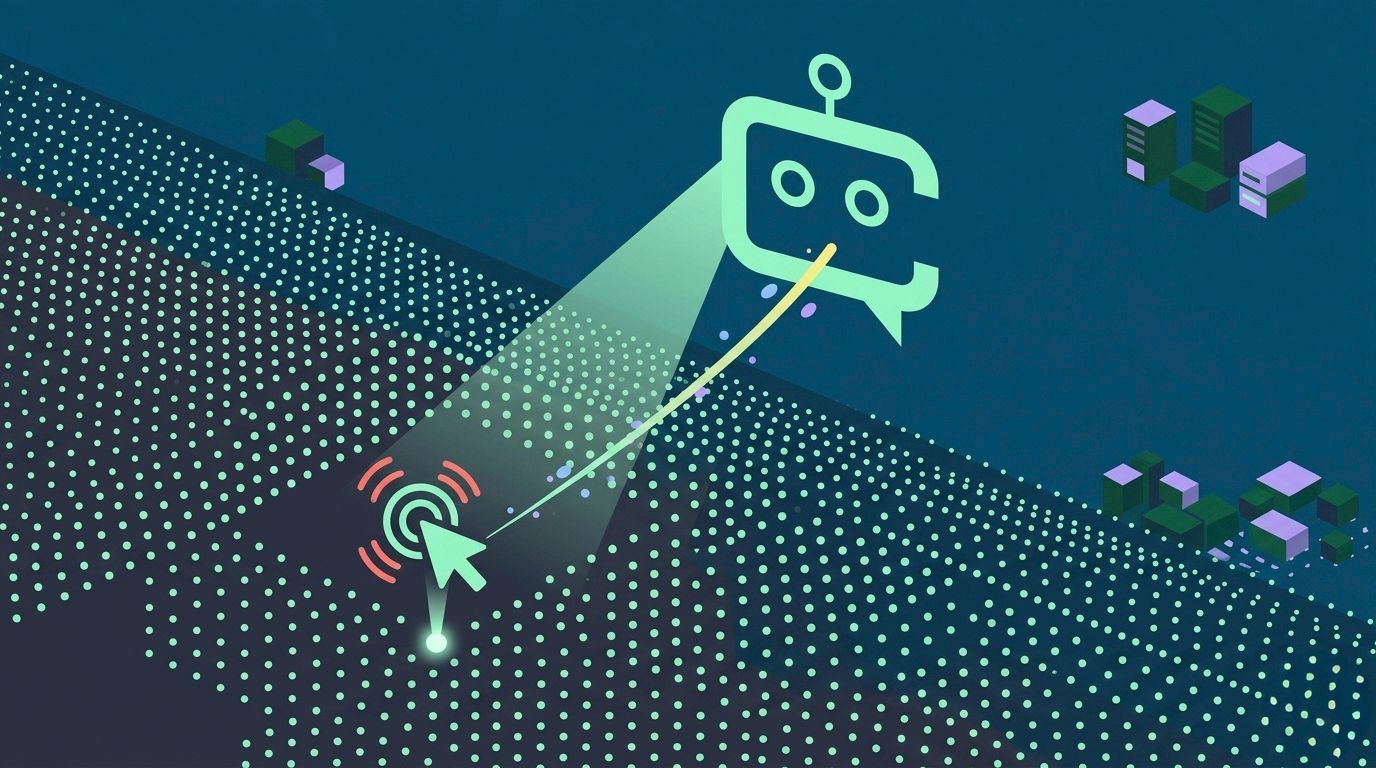
Retrieval-Augmented Generation (RAG) enhances an LLM by fetching relevant external knowledge at query time. At a high level:
- Embedding & Query Encoding: Convert both the customer’s question and source documents into vector embeddings.
- Vector Retrieval: Search a vector database for the top-k most relevant document chunks.
- Context Assembly: Concatenate retrieved text snippets with the original query.
- Generative Response: Prompt the LLM with the assembled context to produce an answer strictly grounded in the retrieved data.
This architecture reduces hallucinations by restricting the model's knowledge source to up-to-date, verified content in the knowledge layer rather than its pre-training corpus alone.
4. Chatlyst’s Proprietary Enhancements
While vanilla RAG is powerful, Chatlyst extends it with enterprise-grade customizations:
- Document Hygiene & Normalization: A preprocessing pipeline ingests PDFs, Word docs, HTML, and database exports, standardizing formatting, removing sensitive markers, and splitting content into semantically meaningful chunks.
- Custom Embedding Model: Trained on millions of support transcripts and policy documents, our embedder captures domain-specific language—product SKUs, policy keywords, tone markers—ensuring retrieval precision.
- Secure Multi-Tenant Vector Store: Each customer’s embeddings reside in an isolated, encrypted vector database. Access controls prevent cross-tenant data leaks and enforce strict separation of knowledge bases.
5. Query-Time Architecture
When a customer request arrives:
- Real-Time Retrieval: The query vector goes to the vector store, returning the top N fragments.
- Semantic Reranking: A light-weight transformer model reranks results by relevance, policy sensitivity, and freshness timestamp.
- Context Assembly: Selected fragments are merged into a single prompt frame that includes instructions to “only answer based on the provided excerpts.”
- Generative Prompting: The LLM (fine-tuned for Chatlyst’s customer tone) generates the final answer, citing source‐IDs for traceability.
6. Policy Enforcement Layer
Generative outputs pass through a two-step policy engine:
- Pre-Generation Constraints: Prompts include embedded policy rules (e.g., waive fees only within 30 days). The LLM is instructed to refuse or escalate if conditions aren’t met.
- Post-Generation Filters: A rule-based validator checks the generated text against critical compliance flags (e.g., “no legal advice”), redacting or rerouting non-compliant answers to a human agent.
7. Security, Compliance, and Auditing
To satisfy enterprise auditors and infosec teams, Chatlyst’s pipeline ensures:
- Encryption: Data at rest and in transit uses AES-256 and TLS 1.3 encryption.
- Access Controls: Role-based permissions restrict document ingestion, vector queries, and audit log access.
- Audit Trails: Every retrieval call and generation event is logged with user ID, timestamp, query vector snapshot, and retrieved source IDs for full traceability.

8. Monitoring & Continuous Learning
Accuracy isn’t “set and forget.” Chatlyst embeds feedback loops:
- Real-Time Dashboards: Visualize retrieval success rates, policy breach attempts, and average response times.
- Human-in-the-Loop Review: Agents can flag suspicious or sub-optimal answers. Flags feed into the “Knowledge Consolidation Bot” that suggests document updates.
- Automated Document Refinement: Periodic re-embedding ensures updated SOPs and FAQs are represented in the vector store within minutes of publishing.
9. Performance Metrics & Case Study
In a recent deployment with RedBox Storage, Chatlyst’s RAG pipeline delivered:
- 92% of inquiries fully handled by AI without human intervention.
- +35% team efficiency gain in 30 days.
- Zero hallucinations observed in a 10,000-ticket sample.
- Average response time of under 30 seconds—meeting SLA targets for enterprise support.
These metrics demonstrate RAG’s power when paired with custom engineering and rigorous policy enforcement.
10. Conclusion & Future Directions
Grounding AI in reliable enterprise knowledge is non-negotiable for scalable, secure customer support. Chatlyst’s proprietary RAG pipeline delivers bulletproof accuracy, policy compliance, and full auditability—eliminating the costly risk of AI hallucinations.
On the roadmap:
- Multimodal Retrieval: Extend RAG to images, video transcripts, and logs for richer context.
- Agentic AI: Empower AI agents to trigger automated workflows (refunds, order checks) with authenticated API calls.
- Zero-Shot Policy Adaptation: Use few-shot learning to onboard new policy domains in hours, not weeks.
Take the Next Step
Ready to eliminate AI hallucinations and supercharge your support?
Try Chatlyst for free today and see how grounded AI transforms your customer experience.