
The Power of Automated Feedback Loops: How Chatlyst’s Knowledge Infrastructure Enables Real-Time AI Learning
Apr 17, 2026
By Rowan Lark
In today’s fast-paced support environment, outdated FAQs and policies lead to frustrated customers and wasted agent time. What if your AI agent could learn from every misstep—flagged in the inbox and updated in seconds? Enter Chatlyst’s KC Bot: a seamless, version-controlled feedback mechanism that lets support teams collect up to 50 corrections at once and refresh source documents in a single click. This post dives into how automated feedback loops work, the architecture that makes them possible, and real-world results for teams who have transformed one-time fixes into perpetual improvement.
1. Introduction
Traditional knowledge bases are typically updated on quarterly or even annual cycles—long after errors have already impacted customer satisfaction. Yet in a digital-first world, support teams need documentation that evolves as fast as their customers’ questions. Continuous learning in AI promises a shift from “set it and forget it” to “learn every time.”
At the crossroads of retrieval-augmented generation (RAG) and agile support operations lies Chatlyst’s Knowledge Consolidation (KC) infrastructure. Rather than relying on periodic retraining or manual doc edits, KC ingests real-world feedback directly from support inboxes, batch-processes changes, and updates source documents instantly. The result? An AI that truly learns on the job, improving accuracy, resolution times, and customer satisfaction—every single day.
2. Understanding Automated Feedback Loops
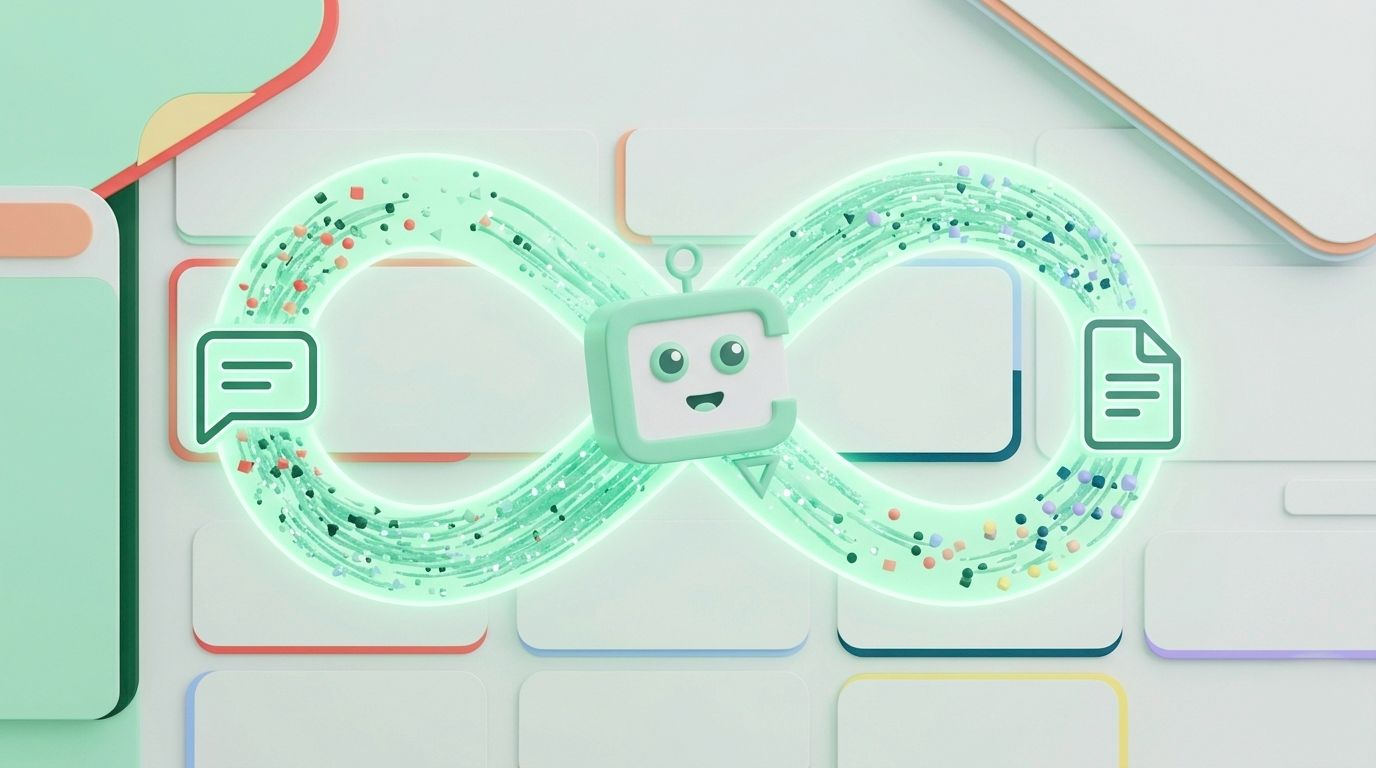
An automated feedback loop is a cycle in which real-time inputs—flagged errors or suggestions—are automatically integrated back into the knowledge base updates to improve future outputs. Core components include:
- Retriever: Captures flagged AI responses from support conversations.
- Consolidation Engine: Batches, organizes, and reconciles multiple feedback items.
- Source Document: The original policies, FAQs, or SOPs serving as the AI’s knowledge reservoir.
- Version Control: Tracks changes and allows rollbacks to maintain documentation integrity.
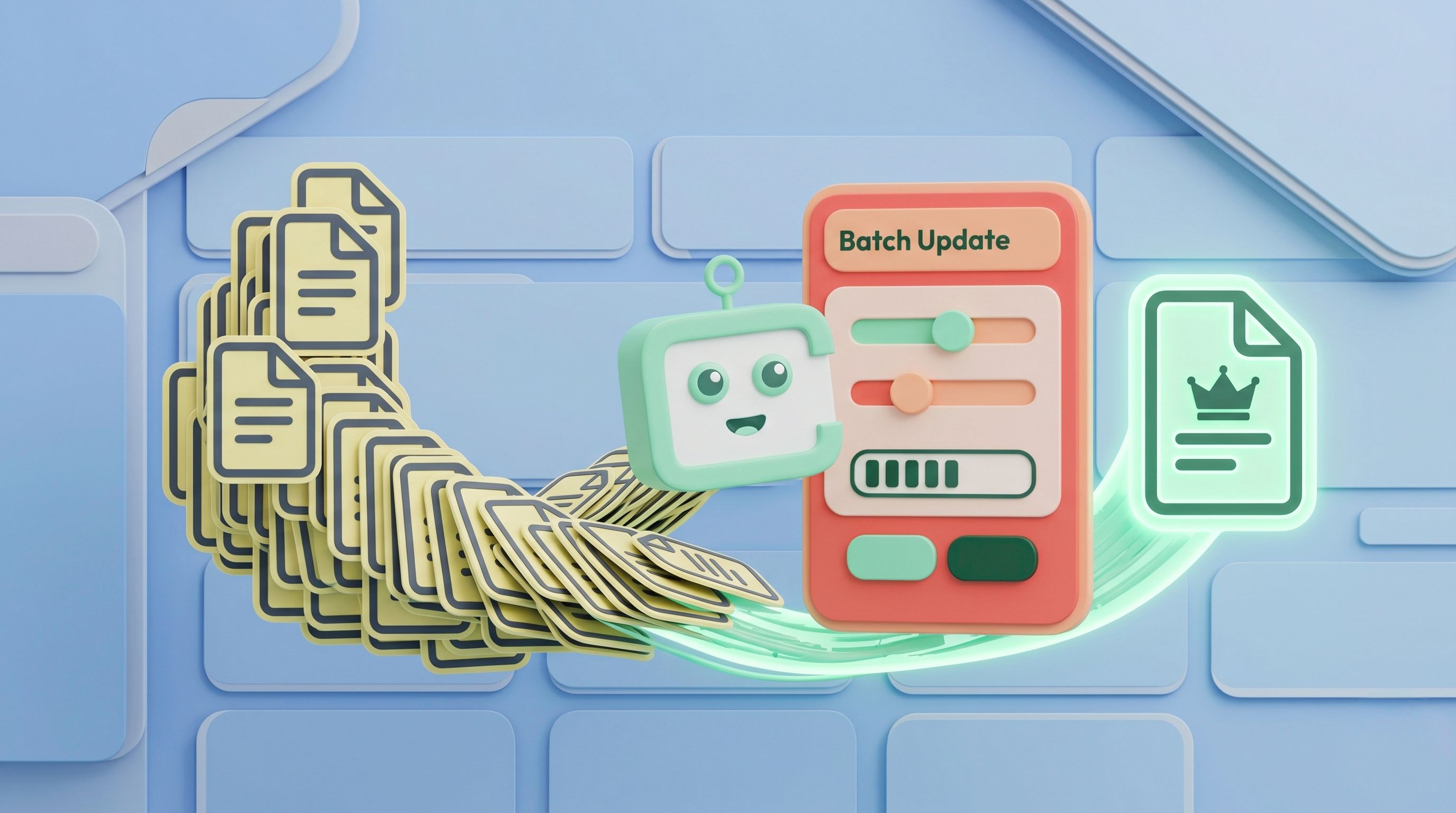
When an AI agent generates an incorrect answer, a human agent or customer flags it in the inbox. The feedback is then routed to the KC Bot, which aggregates up to 50 items in a batch. Once reviewed, a single click pushes changes back into the source document, triggering an immediate refresh of the AI’s knowledge. Compared to manual updates—where feedback might languish in a ticket queue for days or weeks—this feedback loop shrinks error-to-correction time to minutes.
Benefits over manual cycles include:
- Rapid error correction and deployment
- Reduced cognitive load on support agents
- Consistently up-to-date AI performance
- Clear audit trails through version histories
3. Inside Chatlyst’s KC Infrastructure
Chatlyst’s KC architecture unites several layers of functionality to enable frictionless knowledge consolidation:
- Retrieval Layer: Listens for flagged responses in real time. Whenever an agent tags an AI reply as inaccurate or incomplete, the retriever extracts the conversation context, original prompt, and suggested correction.
- Consolidation Engine: Receives feedback items, groups them by document section or topic, and presents them in a review workspace. The engine supports batching up to 50 items at once, reducing repetitive workflows.
- Version Control Module: Integrates with document repositories (e.g., Google Docs, Confluence, Git). Before applying changes, KC Bot creates a new branch or draft version, ensuring that every update is tracked and reversible.
- Update & Deployment: On approval, changes are merged into the master document. The updated content is automatically re-ingested by Chatlyst’s knowledge index, making new AI responses reflect corrections instantly.
A key differentiator is one-click updates paired with rollback safeguards. If a batch of changes introduces unintended side effects, support managers can revert to a previous version, all tracked by KC’s audit logs. This level of control ensures continuous learning without sacrificing governance or compliance.
4. A Step-by-Step Use Case
To illustrate KC in action, let’s follow a typical support scenario:
- Scenario: A customer asks, “What is your 30-day return policy?” The AI references an outdated “14-day” policy and thus provides an incorrect answer.
- Flagging & Categorizing: The human agent notices the discrepancy and clicks the “Flag as Incorrect” button in the Chatlyst workspace. They enter the correct 30-day policy text and categorize it under “Returns Policy.”
- Batching Feedback: That day, the team flags four more policy-related errors. KC Bot aggregates all five feedback items—each tied to specific document sections.
- Review & Consolidation: A knowledge administrator opens KC’s review dashboard, where each feedback item is mapped to the corresponding paragraph in the “Returns & Exchanges” document. They confirm change suggestions and approve the batch.
- Publishing Changes: With one click, KC Bot updates the source document; a new version is created in the connected repository. Chatlyst’s knowledge index automatically reprocesses the updated document.
- Visible Impact: Seconds later, when another customer asks about the return policy, the AI correctly cites “30 days” and even links to the updated policy page.
The entire cycle—from mistake flagging to live correction—takes under five minutes. Support teams see immediate improvements in AI accuracy, leading to higher first-contact resolution and fewer handoffs to human agents.
5. Best Practices for Continuous Learning
To maximize the effectiveness of automated feedback loops, follow these guidelines:
- Select Key Documents: Start with high-impact content—product guides, privacy policies, and returns FAQs. Track feedback on these core documents first.
- Set Feedback Thresholds: Define alert levels (e.g., flag after three related errors within 24 hours) to avoid overwhelming the consolidation dashboard.
- Maintain Governance: Leverage version control and approval workflows to ensure all changes are reviewed by subject-matter experts before publishing.
- Monitor Metrics: Track CSAT, ticket deflection rate, and average time to correction. Improvements in these metrics validate your continuous learning process.
- Iterate & Educate: Hold brief monthly reviews of consolidated changes. Share learnings with product and policy teams to address root causes of recurring support issues.
6. Conclusion & Future Outlook
Automated feedback loops represent a paradigm shift for AI-driven support. By collapsing the gap between error detection and knowledge updates, Chatlyst’s KC infrastructure helps teams deliver reliable, up-to-date AI assistance at scale. Early adopters report:
- 50% reduction in policy-related support tickets
- 20% improvement in AI-first resolution rates
- 10-point boost in CSAT within one month of KC activation
Looking ahead, the next frontier includes self-healing AI agents that proactively suggest content updates based on usage trends, and agentic feedback—where AI autonomously flags and resolves minor inconsistencies. The era of “static” knowledge bases is ending. With Chatlyst’s KC Bot, continuous learning isn’t just a future vision; it’s live today.